In this report we look at the recent reveal of the first-ever Phase 3 trial data testing LSD. A press release touted extraordinary results but how impressive were the findings really? And how does this data compare to recent Phase 3 findings for psilocybin? Yep, I’m stoking the age-old acid versus mushroom debate. I’m also going to look at how magic mushrooms were depicted in a recent TV show.


Anyone with an eye on psychedelic news surely saw a headline or two recently proclaiming wildly effective top-line results from the first ever Phase 3 human trial testing LSD as a treatment for depression. Words like ‘profound’ were used to describe these ‘best ever’ results for a late-state psychedelic clinical trial, and the very next day Definium Therapeutics, the company developing the treatment, reported raising $700 million dollars in new funding.

This was undoubtedly a blockbuster moment for psychedelic medicine. And the way Definium presented its data certainly foreshadowed the coming of a promising new treatment for depression.

The big showcase slide revealed a single 100 microgram dose of LSD led to a big drop on a scale of depression frequently used in mental health studies, known as the Montgomery–Åsberg Depression Rating Scale. And that drop seemed to hold relatively strong for up to three months.
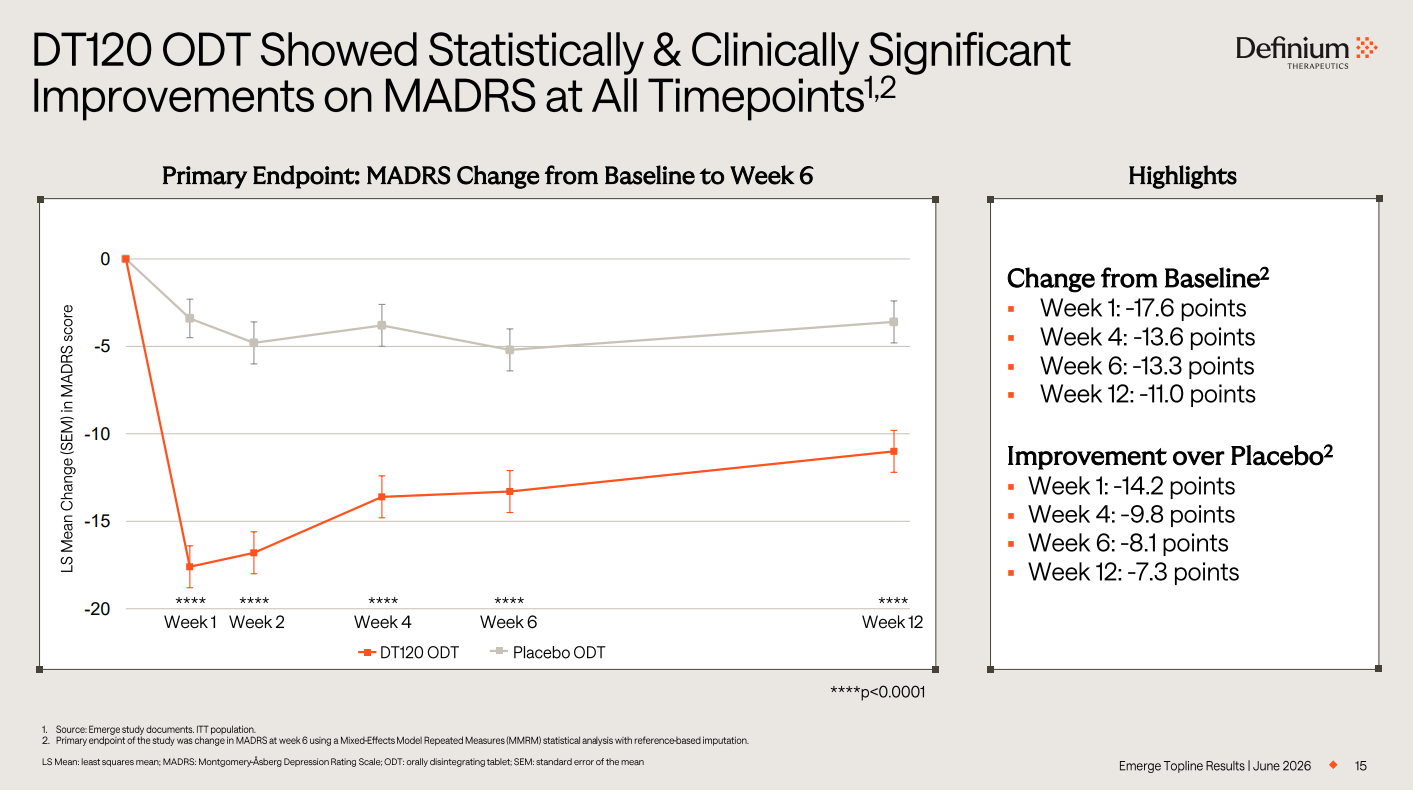
Compared to the placebo response these results are undeniably ‘profound’, and that slide looks pretty impressive. But as with all clinical data, you can draft it up in a million different ways. Perhaps another way to view this top-line data is to compare it to some other trials testing current ‘best-in-class’ antidepressant drugs.

Here’s another slide. This one pulls data from a big Phase 3 antidepressant trial conducted around a decade ago, encompassing over 600 participants.
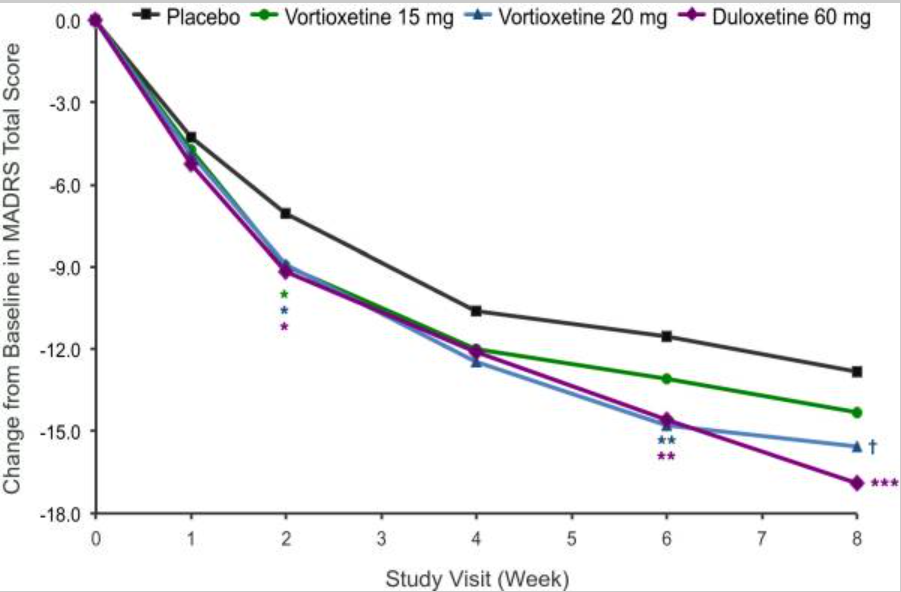
The trial was testing the efficacy of a new-ish antidepressant drug called vortioxetine (or Trintellix). Setting aside the more pronounced placebo effect, changes to MADRS scores in those taking the active drug after six weeks were pretty similar to what Definium is reporting with LSD. At the eight week point they were even slightly better.

And these results are generally considered relatively modest in the world of antidepressant clinical studies. When put to clinical trial, more traditional SSRI and SNRI antidepressants tend to deliver anywhere from a 10 to 20 point drop on MADRS ratings after a couple of months of use.

Of course I don’t want to compare apples to oranges here. Caveats abound.

For example, LSD is just one dose whereas these antidepressants are daily medicines. And the broader side effects from most antidepressants are well chronicled, from blunted emotions to sexual dysfunction. So you could easily look at the LSD data and say, hey, this is a drug that works faster than traditional antidepressants and doesn’t have the same side effects.

Another slide worth briefly looking at from the Definium release is the percentage of participants that hit remission at the six week point after their LSD dose.
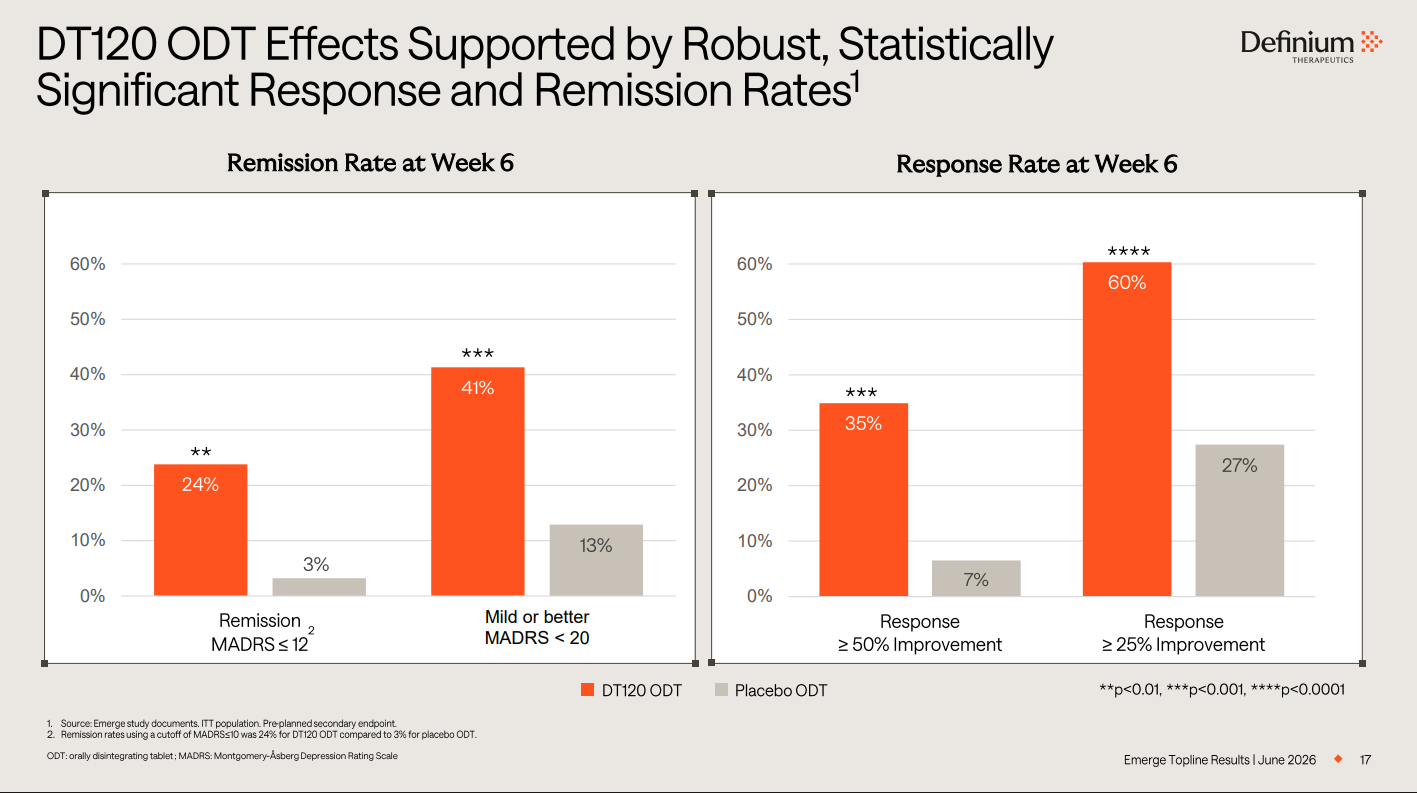
Here we see 24% of people scoring low enough on the MADRS to be considered in remission. That’s about one in four participants. As neuroscientist Martin Arjns told Josh Hardman at Psychedelic Alpha, this “seems on the lower side of what you would expect in the landscape of depression treatments, where 30-40% remission rates are more customary.”

There’s plenty more data points in the Definium press release but I think this is a good moment to temper expectations into how powerful psychedelics seem to be looking as antidepressant medicines.

As we are slowly getting more Phase 3 data there are plenty of ways to frame the results but one controversial take is it may look like psychedelics are just about as effective as antidepressants; at least when we track things by brute force quantitative scales like MADRS.

One musing I’d like to leave you with is the question I floated up top.

What if LSD is a better antidepressant than psilocybin?

Take a look at this slide. Here are the top-line results from Compass Pathways’ big Phase 3 trial testing psilocybin for treatment-resistant depression.

At the time these results were released many commentators noted them as underwhelming. They are likely strong enough to be approved by a regulatory body, and probably clinically significant to an individual patient's sense of well-being in the real world, but they're certainly not the paradigm-smashing medicine many had heralded psychedelics to be.

On the back of Definium’s latest release it's interesting to consider whether LSD may be more effective at treating depression. And if so, why?

Before you yell at me over socials, I’ll recognise there are some big differences between these two Phase 3 trials. Variables that make it challenging to compare the findings.

The most glaring variable are the patient cohorts targeted. Compass aimed its big trial at treatment-resistant depression, an especially challenging cohort of patients while Definium chose patients with major depressive disorder (MDD). It’s fair to say the milder form of depression may be easier to treat with psychedelics, and psilocybin could register stronger MADRS data if it were targeting that same cohort (this is a question we will likely have answers to soon when we see Usona’s Phase 3 data testing psilocybin on MDD patients).

But as a thought experiment it is interesting to consider how psilocybin and LSD differ. Because as drugs they do certainly differ, despite being lumped into the same classic psychedelic container.

A wonderfully complex study published in 2025 titled ‘The polypharmacology of psychedelics reveals multiple targets for potential therapeutics’ delivered a giant dump of data showing the various ways psychedelic and psychoactive drugs tickle receptors in a human body. The results were a little head-spinning, demonstrating how psychedelics affect hundreds of different receptor targets. And each molecule worked a little differently.

This dense graphic from the study shows different drugs on the vertical axis and receptor targets on the horizontal. The heatmap indicates strength of binding and the (x) shows no response. As you can see, LSD does a whole lot more things at a whole lot more receptor targets compared to Psilocybin.

One stand out difference between LSD and psilocybin was the broader effects of the former drug. In particular LSD showed potent effects on some dopamine and adrenergic receptors while psilocybin didn’t go near those receptors.

Absolute unscientific speculation aside, it is worth remembering LSD and psilocybin aren’t the same drug so maybe one could be more effective at some things compared to the other?

Psychedelic Pop Culture Corner

An ongoing feature in these reports will be a look at how psychedelics are depicted in modern pop culture. Over a decade ago I gave a series of lectures in various places talking about psychedelics in movies. The general thrust of the talk was a study into the way depictions of psychedelics in films across the 1960s and 1970s served as an interesting mirror reflecting shifting public sentiments towards the drugs.

You can watch a version of the talk I gave in 2014 here. Enjoy a young nervous me stumbling over my words.

Now, well into the 2020s, it's wild at how often you find movies and TV shows slipping a sub-plot involving psychedelics into their stories. In the coming weeks I’ll talk about a bunch of interesting ones I’ve seen lately, and please, in the comments, do let me know if you catch a new TV show or movie that dips a toe into the ocean of psychedelics. I can’t catch them all myself.

To start, this report is gonna look at an episode of a new Apple TV series called Widow’s Bay. Don't worry if you haven't seen the series, I'll avoid spoilers for the greater story.

The show is incredible. I highly recommend it. A wonderfully scary, funny, creepy tale of strange things happening on a remote island.

The fifth episode in the first season is the show’s ‘trip’ episode following the mayor of the village Tom (played by Matthew Rhys) accidentally taking a hero dose of magic mushrooms. These are not your normal shrooms, however, they are a super potent species unique to the island served up by the island’s shaman in residence.

For the most part the episode is admirable in its restraint, never serving up the generic hallucinatory experience. Instead it structures Tom’s trip around a series of blackouts where he suddenly wakes up after losing short stretches of time.

The rhythm of these jumps gives the episode a compelling sense of everything being slightly off-kilter; and Rhys plays the whole thing with a sensational wide-eyed craziness that recalls a wild 1970s Gene Wilder.

Perhaps the most interesting part of the ‘trip’ to me is the way the show uses Tom’s psychedelic experience as a way of recalling some lost traumatic memories. The episode climaxes with him watching himself play out past memories. As a story device this is a pretty convenient way to deliver to the audience some key plot exposition, flashbacks to things that will be important in coming episodes.

But from our perspective as psychedelic watchers it is interesting to see the drug being used in way that is linked to modern therapy practices. This idea that psychedelics can connect one to repressed trauma memories is deeply intertwined with modern psychedelic medicine.

It's a controversial idea, and one I discuss in my upcoming book. It’s curious, and notable, to see this used as a device in 2026. And it speaks to the way psychedelics have entered the current zeitgeist as a therapeutic tool to manage past trauma.

'Trip Reports' Updates

I want to share some endorsements I’ve been sent for the book by early readers. I’ll start with this deeply meaningful take sent to me by the wonderful Mike Jay. I’ve long been a massive fan of Jay’s work: Mescaline, High Society, Free Radicals and Psychonauts are all pretty crucial books if you want to dig into the alternate histories of psychedelics.

I couldn’t believe he said yes to reading a clunky early PDF proof of the book. I couldn’t believe he actually read the whole thing. And then I couldn’t believe he actually liked it. Was an absolute honour to have him send through this quote for the book.

That last line in particular really tickled me as it became clear Mike really picked up on some of the ideas I raised in the latter chapters.

Thanks for reading this far everyone. I’ll be back in a fortnight with another dispatch.

The link has been copied!